Step outside a spacecraft without a suit and you'd have roughly 15 seconds of useful consciousness before things go very badly, very fast. There's no air, no pressure, and temperatures that swing from over 120°C in direct sunlight to well below -150°C in shadow, sometimes just meters apart. A space suit isn't really clothing in any normal sense of the word — it's a fully self-contained, one-person spacecraft that happens to be shaped like a human body, built to solve half a dozen ways space is actively trying to kill the person wearing it, all at once. Here's exactly how it pulls that off.
Threat One: There's No Air Pressure Out There, and Your Body Needs Some
Space is a near-perfect vacuum, and the human body is built to function at roughly one atmosphere of pressure — the pressure your body experiences at sea level on Earth, pressing in from every direction. Remove that pressure suddenly and without protection, the water in your body's tissues would start to vaporize under your skin, a genuinely gruesome effect called ebullism, while the air in your lungs would rapidly expand and could rupture lung tissue if you tried to hold your breath. You wouldn't instantly freeze or explode the way movies sometimes depict it, but you would lose useful consciousness within about 15 seconds as deoxygenated blood reaches your brain, and without rapid re-pressurization, the situation would become fatal within a couple of minutes.
A space suit solves this by pressurizing the astronaut's body, the same job your spacecraft's cabin does when you're inside it. Most modern spacewalking suits, including NASA's, don't pressurize to a full sea-level atmosphere — that would make the suit so stiff and rigid that bending a joint would be like fighting a fully inflated balloon. Instead, they typically run at a lower pressure, around 4.3 psi (compared to sea-level's roughly 14.7 psi), using pure oxygen instead of a nitrogen-oxygen mix, which still supplies the body with an equivalent amount of usable oxygen while keeping the suit flexible enough to actually work in. This lower-pressure, pure-oxygen approach is also why astronauts have to spend time "pre-breathing" pure oxygen before a spacewalk — it flushes nitrogen out of their bloodstream to prevent decompression sickness, the same concern scuba divers manage when surfacing from deep water.
Threat Two: Temperatures That Swing by Nearly 300 Degrees
In low Earth orbit, a spacesuit alternates between blistering direct sunlight, where surface temperatures can exceed 120°C (250°F), and the deep shadow of Earth's night side, where temperatures can drop below -150°C (-250°F) — and because there's no atmosphere to carry heat away or distribute it evenly, the difference between a sunlit patch of suit and a shaded patch just centimeters away can be extreme. The suit's outer layer, called the Thermal Micrometeoroid Garment, handles most of this: it's built from multiple layers of insulating material, including reflective, foil-like layers similar in concept to a thermos, designed to reflect away solar heat and retain the astronaut's own body heat when in shadow.
Interestingly, the more immediate temperature problem for an astronaut is usually not the suit getting too cold — it's the astronaut's own body generating too much heat during physical exertion, with nowhere for that heat to go in a vacuum where there's no surrounding air to carry it away by convection the way sweat cools you on Earth. That's solved by a separate system worn directly against the skin: a liquid cooling and ventilation garment, essentially a stretchy bodysuit laced with roughly 100 meters of thin plastic tubing that circulates cool water across the astronaut's entire body, carrying excess heat away to be radiated or vented out through the suit's backpack life-support system.
Threat Three: No Air to Breathe, and Nowhere for Exhaled Air to Go
The suit's life support comes from a backpack unit called the Primary Life Support System (PLSS), which functions as a complete, self-contained miniature spacecraft life-support system. It carries pressurized oxygen tanks to keep the suit breathable, and it actively removes exhaled carbon dioxide using chemical scrubbing materials (traditionally lithium hydroxide canisters, with newer, more efficient regenerable scrubbing systems increasingly used on current and next-generation suits) so CO2 doesn't build up to dangerous levels inside the sealed helmet. The same backpack manages the water-cooling loop described above, regulates humidity so the visor doesn't fog, and typically provides somewhere in the range of 6 to 8 hours of life support for a single spacewalk, depending on the specific suit and mission profile.
Threat Four: Micrometeoroids and Orbital Debris
Space isn't empty — tiny particles of rock, ice, and human-made debris travel at extremely high velocities, and even something the size of a grain of sand can carry enough kinetic energy at those speeds to puncture unprotected material. The outer layer of a spacesuit includes multiple tough, tightly woven fabric layers, often incorporating materials like Kevlar and other high-strength synthetic fibers, specifically engineered to absorb and disperse the impact energy of small debris strikes before they can reach the pressurized layers underneath. It's not absolute protection against a large impact, but it's a real, functional defense against the much more common threat of tiny high-speed particles.
Threat Five: Radiation
Space radiation, including energetic particles from the Sun and cosmic rays from deep space, is a genuine long-term health concern for astronauts, but it's honestly the threat a spacesuit is least equipped to fully solve. Effective radiation shielding generally requires substantial mass — thick material that would make a suit far too heavy and rigid to move in — so spacesuits provide only modest radiation protection compared to a spacecraft's hull. In practice, radiation exposure is managed less through the suit itself and more through mission planning: limiting the duration and frequency of spacewalks, monitoring space weather for solar events, and relying on the much more substantial shielding of the spacecraft itself for the majority of a mission's duration.
How the Suit Is Actually Built, Layer by Layer
Put all of this together and a modern EVA (extravehicular activity) suit is really a stack of specialized layers, each solving one specific problem. Closest to the skin sits the liquid cooling and ventilation garment. Over that goes the pressure garment, an airtight, rubberized bladder layer that holds the suit's internal pressure, followed by a restraint layer, a tougher fabric layer that keeps the pressurized bladder from ballooning outward into an unusable shape (similar to the way an inflated tire needs a rigid wheel to hold its shape rather than just expanding into a sphere). On top of all that sits the Thermal Micrometeoroid Garment, combining insulation and debris protection in one outer shell. The helmet's visor typically includes a thin, genuine gold coating on an additional outer sun visor, reflecting away enough solar radiation and glare to protect the astronaut's eyes without needing tinted glass that would darken their entire field of view. Joints at the shoulders, elbows, knees, and wrists use specialized bearings and fabric folding patterns specifically engineered to allow a meaningful range of motion despite the suit being pressurized like a firm balloon — this joint mobility problem has historically been one of the hardest parts of spacesuit engineering to get right, and it remains a major focus of new suit designs today.
A Very Short History of the Spacesuit
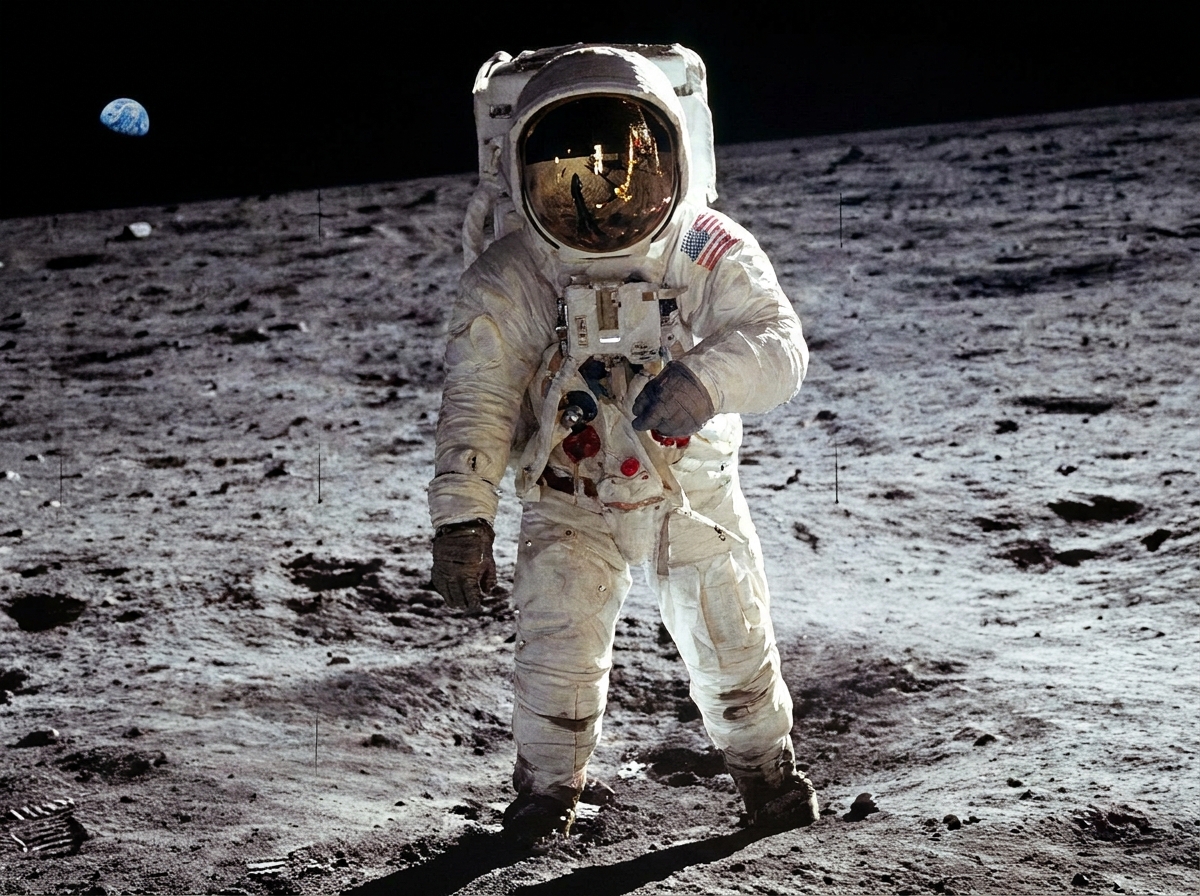
Early spacesuits, worn during the Mercury and Gemini programs in the 1960s, were adapted from military high-altitude pressure suits and offered fairly limited mobility. The Apollo program's A7L suit, famously worn on the Moon, added far more sophisticated joint mobility and life-support capability, since Apollo astronauts needed to actually walk, bend, and work on the lunar surface rather than just survive in a seated position. The Space Shuttle era introduced the EMU (Extravehicular Mobility Unit), a modular, more reusable suit design that, remarkably, remains in active use for spacewalks from the International Space Station even now, decades after it was originally developed — a fact that has become an increasingly significant problem, since NASA has openly acknowledged the current ISS suit fleet is aging, with a shrinking number of full working units and rising maintenance concerns as of recent reporting.
The New Generation Headed to the Moon and Beyond
This aging-fleet problem, combined with NASA's Artemis program aiming to return astronauts to the lunar surface, has driven a genuinely active new era of spacesuit development. In 2025, Axiom Space, the company NASA selected to build the suits for the Artemis III lunar landing mission, began advanced testing of its next-generation AxEMU suit, developed with design and materials input from an unusual partner: the Italian fashion house Prada, brought on specifically for its expertise with advanced textiles and pattern engineering, alongside a separate partnership with eyewear company Oakley to help develop the suit's visor system. The AxEMU is designed for the lunar south pole's extreme environment specifically, including protection against sharp, abrasive lunar dust that proved to be a serious problem for suits and equipment during the Apollo missions, and it's built with greater joint mobility than earlier suits, intended to let astronauts crouch, kneel, and collect samples more naturally than Apollo-era astronauts could manage.
Separately, commercial spaceflight has produced its own new suit designs: SpaceX developed a sleeker, lighter EVA suit for the Polaris Dawn mission in September 2024, which included the first-ever commercial (non-government) spacewalk, featuring a newly designed helmet display and a more form-fitting design built with lessons learned from the company's existing intravehicular (in-capsule) pressure suits. Meanwhile, NASA's own space station spacesuit program has gone through real turbulence — an earlier contract awarded to Collins Aerospace for new ISS suits ran into significant development delays, and reporting through 2025 has highlighted growing urgency around getting new, reliable EVA suits into service before the current aging fleet becomes an operational risk.
Why All of This Still Matters
Getting spacesuit design right isn't a solved, finished problem — it's an active, high-stakes engineering challenge tied directly to some of the most ambitious plans currently on the table in spaceflight. A crewed return to the lunar surface depends on suits that can handle far rougher terrain and far more physical activity than orbital spacewalks require. Any eventual mission to Mars would demand suits engineered for an entirely different set of problems: a thin but real atmosphere, extremely fine and highly abrasive dust, and multi-year mission durability that no suit has ever needed to provide before. Every improvement in materials, joint mobility, and life-support efficiency directly expands what's actually possible for the people wearing these suits — which is really the whole point of the engineering in the first place.
Frequently Asked Questions
How long can an astronaut survive in a spacesuit? Standard EVA suits typically provide around 6 to 8 hours of primary life support for a single spacewalk, which is why spacewalks are carefully planned and timed operations rather than open-ended activities, with built-in safety margins and contingency procedures for problems.
Do spacesuits protect against being hit by space debris? The outer layer offers real protection against small particles, like micrometeoroids and tiny debris fragments, by absorbing and dispersing impact energy. It does not offer meaningful protection against larger debris, which is a genuine mission risk managed primarily through tracking and avoidance rather than suit armor.
Why do astronaut spacesuits look bulky and stiff? That bulkiness comes directly from the pressurization requirement — a suit inflated to roughly 4.3 psi behaves somewhat like a firm balloon, resisting bending at every joint, which is why so much spacesuit engineering effort goes specifically into joint design, bearings, and fabric patterning aimed at fighting that stiffness and restoring natural movement.
Are spacesuits custom-made for each astronaut? Historically, NASA's Apollo and Shuttle-era suits were often individually fitted or built from a limited set of interchangeable modular parts sized to each astronaut. Newer suit programs, including Axiom's AxEMU, have placed a stronger emphasis on suits that can properly and comfortably fit a much wider range of body types and sizes than earlier generations managed, partly in response to past, well-documented fit limitations.
Why did NASA partner with a fashion brand on a spacesuit? Prada's involvement in the AxEMU program specifically draws on the company's advanced expertise in technical textiles, garment construction, and durable materials engineering — skills that, while developed for fashion applications, translate directly into the kind of precise, durable, flexible fabric work a modern spacesuit demands.
The Bottom Line
A spacesuit is one of the most quietly extraordinary pieces of engineering humans have ever built: a fully self-contained life-support system, pressure vessel, thermal shield, and debris armor, all packed into something one person can actually move around in while doing genuinely delicate physical work in one of the most hostile environments imaginable. It's easy to see a spacewalk and think of the suit as simply protective clothing. It's closer to the truth to think of it as the smallest, most personal spacecraft ever built — and with a new generation of suits now being tested for the Moon, that spacecraft is still very much evolving.
References
NASA — Extravehicular Activity and Human Surface Mobility Program
NASA — Spacesuit for NASA's Artemis III Moon Surface Mission Debuts
Axiom Space — Axiom Space Reveals Next-Generation Spacesuit for Astronauts Returning to Lunar Surface
Axiom Space — Testing of Next-Gen Spacesuit Underway
Spaceflight Now — Axiom Space, Oakley Partner on Spacesuit Visor for Artemis Missions
NASASpaceFlight.com — Artemis Spacesuits Tested as Existing ISS Suits Are Showing Their Age
New Space Economy — What Is the SpaceX EVA Suit?
SpaceNews — Artemis Spacesuit Development Risks Further Delays
Aerospace America — The Next Generation of Spacesuits Being Designed Digitally
NASA — Extravehicular Mobility Unit (EMU) technical overview and history, NASA Johnson Space Center.
Article last fact-checked: September 2026. Spacesuit development is moving quickly ahead of the Artemis lunar missions — readers wanting the latest program updates should check current announcements from NASA and Axiom Space directly.