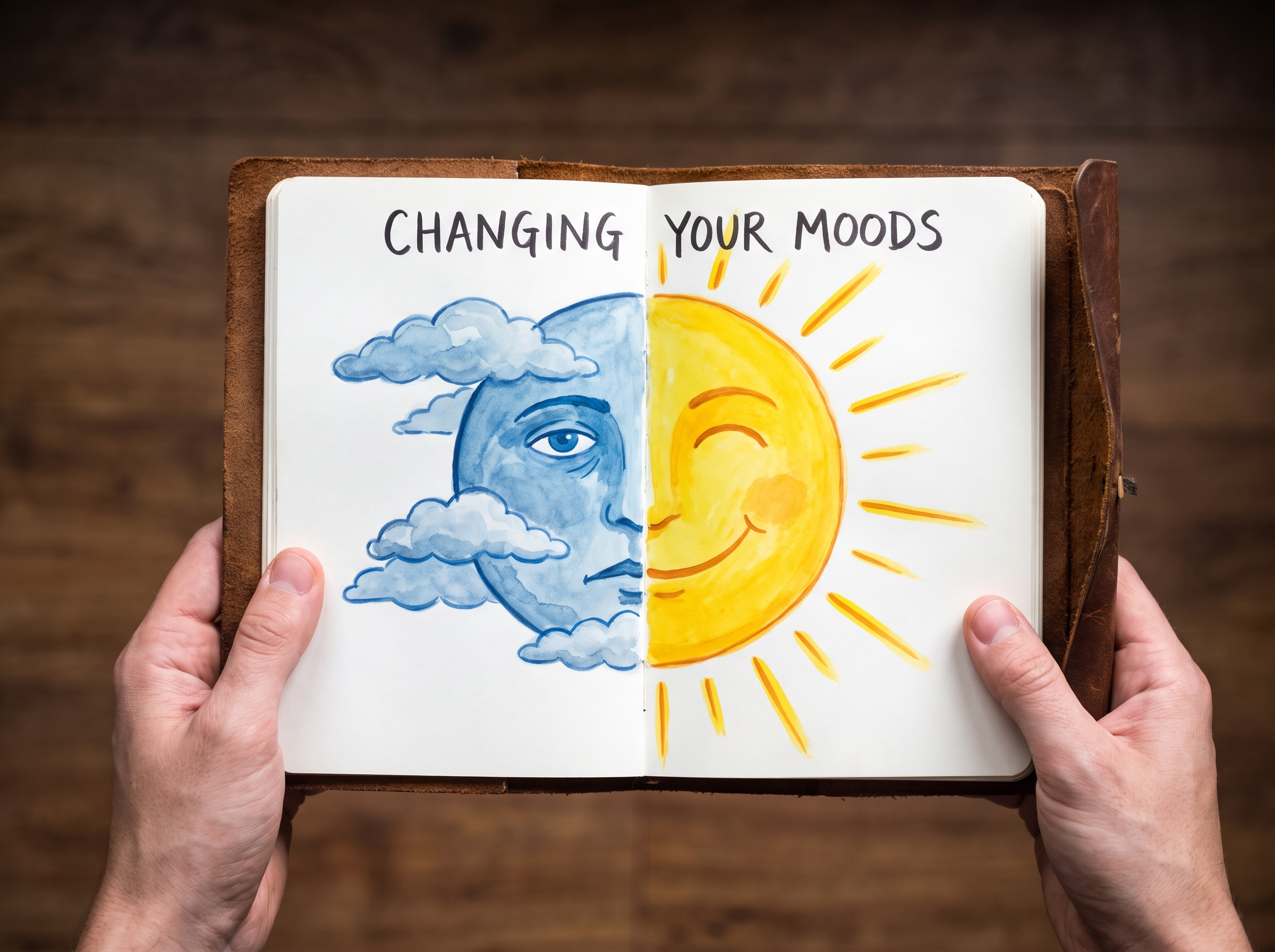
You've probably heard mood explained in one tidy sentence: happiness is dopamine, calm is serotonin, stress is cortisol, and if any of them get "out of balance," your mood suffers. It's a clean story, it fits on a poster, and it's not exactly wrong — these chemicals genuinely do shape how you feel. But the tidy version also flattens a much more interesting and more accurate picture, one where a handful of molecules matter, but not in the simple, one-chemical-one-emotion way pop psychology usually suggests. Here's what's actually going on, chemical by chemical, plus where the popular story has gotten ahead of the evidence.
The Chemical Messengers, One at a Time
Your mood isn't run by any single chemical. It's shaped by a whole cast of neurotransmitters (chemicals that carry signals between nerve cells) and hormones (chemicals released into the bloodstream that affect the body and brain more broadly), each doing a somewhat different job, often overlapping and interacting with the others. Here are the main ones researchers point to.
Serotonin
Serotonin is involved in regulating mood, appetite, digestion, and sleep, and it's the neurotransmitter most associated in the public mind with feelings of stability and contentment. It's produced both in the brain and, in far larger quantities, in the gut — in fact, roughly 90% of the body's serotonin is made in the digestive tract, which is part of why gut health and mood turn out to be more connected than most people expect. Serotonin also plays a role in the sleep-wake cycle, since it's a precursor the body converts into melatonin, the hormone that helps regulate sleep timing.
Dopamine
Dopamine is often nicknamed the "reward chemical," but that's a slight oversimplification — it's more precisely tied to motivation, anticipation, and the drive to pursue something rewarding, rather than the pleasure of the reward itself. Dopamine levels rise not just when you get something good, but often more sharply in anticipation of it — the reason a video game's near-miss can feel oddly compelling, or why anticipating a paycheck can feel almost as good as receiving it. Dopamine is central to the brain's motivation and habit-forming circuitry, which is also why it's heavily implicated in addiction: substances and behaviors that artificially spike dopamine can hijack the same system that normally motivates ordinary, healthy pursuit of goals.
Norepinephrine (Noradrenaline)
Norepinephrine is closely tied to alertness, focus, and the body's stress response. It works alongside its close chemical relative, adrenaline, to prepare the body for action — increasing heart rate, sharpening attention, and mobilizing energy. In the brain specifically, norepinephrine plays a significant role in regulating arousal, vigilance, and mood; both unusually low and unusually high activity in norepinephrine-related brain circuits have been linked to mood and anxiety disorders in different ways.
GABA (Gamma-Aminobutyric Acid)
GABA is the brain's primary inhibitory neurotransmitter, meaning its main job is to calm neural activity down rather than excite it. Think of it as the brain's braking system — it counterbalances excitatory signals, helping prevent neurons from firing excessively. Adequate GABA activity is associated with feelings of calm and relaxation, and several classes of anti-anxiety medications work specifically by enhancing GABA's calming effect.
Glutamate
Glutamate is the brain's primary excitatory neurotransmitter — the accelerator to GABA's brake. It's essential for learning, memory formation, and general brain signaling, and it needs to stay in careful balance with GABA; too much unchecked excitatory activity is linked to anxiety and overstimulation, while emerging research has also implicated glutamate system dysfunction in depression, which is part of why an entirely new class of fast-acting antidepressants, based on the anesthetic ketamine, specifically targets glutamate receptors rather than serotonin.
Endorphins
Endorphins are the body's natural pain-relieving and mood-boosting chemicals, chemically related to opioids in how they act on the brain's receptors, though produced naturally by your own body. They're released during physical exertion (the source of the well-known "runner's high"), laughter, and even eating certain foods, and they contribute to feelings of euphoria and reduced pain perception.
Oxytocin
Sometimes called the "bonding hormone," oxytocin is released during physical touch, social bonding, childbirth, and breastfeeding, and it plays a documented role in trust, attachment, and social connection. It's produced primarily by the hypothalamus and released by the pituitary gland, functioning as both a brain neurotransmitter and a body-wide hormone.
Cortisol
Cortisol is the body's primary stress hormone, released by the adrenal glands in response to perceived threats or stress, as part of what's commonly called the fight-or-flight response. In short bursts, it's protective and useful, sharpening focus and mobilizing energy. But chronically elevated cortisol, from prolonged or repeated stress, is associated with anxiety, sleep disruption, and, over time, changes in the brain regions involved in mood regulation — which is a big part of why chronic stress management is such a consistent theme in mental health research.
Why the "Chemical Imbalance" Story Is More Complicated Than You've Heard
For decades, the most common public explanation for depression specifically was that it's caused by a "chemical imbalance," usually meaning too little serotonin. It's a genuinely useful shorthand for explaining that depression has a real biological component, not just a matter of willpower — and that framing helped reduce stigma for a lot of people. But as a precise scientific claim, it's held up far less well than the popularized version suggests.
In 2022, a team led by psychiatrist Joanna Moncrieff at University College London published a large systematic umbrella review in the journal Molecular Psychiatry, pulling together decades of research across multiple methods — serotonin levels and metabolites, receptor studies, genetic studies, and studies that artificially lowered tryptophan (a building block of serotonin) in participants. Their conclusion: the evidence did not support the idea that depression is caused by lower serotonin activity or concentration. It's worth being precise about what this did and didn't show. It's not evidence that serotonin has nothing to do with mood, and it's not evidence that antidepressant medications like SSRIs (selective serotonin reuptake inhibitors) don't help people — large numbers of controlled trials show they do help many people with depression, even if the exact mechanism by which they help remains genuinely unclear rather than being the simple "restoring serotonin to normal" story often told. What the review challenged was specifically the simplified, low-serotonin-causes-depression narrative as a complete explanation.
The review itself became a genuinely contested piece of science. Some researchers, including a formal response from King's College London, pushed back on aspects of the review's methodology and argued it overstated its conclusions in certain respects, while others in the field noted that serious researchers had already moved past the simple serotonin-deficiency model years before this review, even as the public-facing version of the story lagged behind. The honest, current summary: serotonin is genuinely involved in mood regulation, but depression itself appears to arise from a more complex mix of factors, including genetics, life stress, other neurotransmitter systems, inflammation, and brain circuitry differences — not a single chemical dial that's simply turned too low. This is an area of real, ongoing scientific debate, not a settled matter in either direction.
It's Not Just Chemicals — It's Circuits, and It's the Whole Body
Even beyond the serotonin debate specifically, thinking of mood purely in terms of individual chemical "levels" misses a lot of what modern neuroscience actually studies. Mood arises from the activity of interconnected brain circuits and regions — including the prefrontal cortex (involved in regulating emotional responses), the amygdala (involved in processing threat and fear), and the hippocampus (involved in memory and also, notably, one of the few brain regions known to grow new neurons throughout adulthood, a process linked to mood regulation). These regions communicate using the chemicals described above, but the pattern and balance of that communication across circuits matters at least as much as the raw amount of any single chemical present.
There's also a genuinely fast-growing area of research into the gut-brain axis — the two-way communication network between your digestive system and your brain, partly carried out through the vagus nerve and partly through chemical signals, including serotonin produced by gut bacteria. Emerging research increasingly links the composition of a person's gut microbiome to mood and even to depression risk, though this remains an active, evolving research area rather than a fully mapped-out mechanism. Similarly, chronic low-grade inflammation throughout the body has been increasingly linked to depression risk in recent research, adding yet another layer beyond simple neurotransmitter levels to the full picture of what shapes mood.
What Actually Moves These Chemicals in Daily Life
None of this is to say brain chemistry doesn't matter for everyday mood, or that there's nothing practical to take from it — quite the opposite. A number of well-supported, everyday factors reliably influence these same chemical systems.
Exercise reliably boosts endorphins and also increases a protein called BDNF (brain-derived neurotrophic factor), which supports the growth of new neural connections and has been consistently linked to improved mood and reduced anxiety in research. Sunlight exposure influences serotonin production and helps regulate the body's circadian rhythm, which is part of why seasonal changes in daylight are linked to mood changes for some people. Sleep is deeply intertwined with nearly every chemical system discussed here — poor sleep disrupts serotonin, dopamine, and cortisol regulation simultaneously, which is a major reason sleep quality and mood are so tightly linked in both directions. Social connection and physical touch release oxytocin, and consistent research links strong social bonds to better long-term mental health outcomes. And chronic stress management matters because of cortisol's outsized, cumulative effect on mood-related brain regions when it stays elevated for extended periods.
A Quick, Honest Caveat
Everything above describes general mechanisms in typical brain chemistry, not a diagnostic explanation for any individual's mood or mental health. If you're dealing with a persistent low mood, anxiety, or other mental health concerns, a doctor or mental health professional can offer an actual assessment and options tailored to your situation — this article is meant to explain the underlying biology in general terms, not to stand in for that kind of care.
Frequently Asked Questions
Can you actually raise your dopamine or serotonin naturally? To a meaningful degree, yes — behaviors like exercise, adequate sleep, sunlight exposure, and even anticipating and achieving small goals do measurably influence these systems. That said, "naturally boosting" a neurotransmitter through lifestyle changes is a gradual, cumulative effect, not an instant chemical fix, and it's a different thing from the more targeted, larger effect of medication when that's clinically appropriate for a diagnosed condition.
Do antidepressants work if the "chemical imbalance" theory isn't fully supported? Yes — that's actually one of the more interesting wrinkles in this area of science. Large clinical trials consistently show SSRIs and other antidepressants help many people with depression, even though the precise mechanism behind why they help is less settled than the simple "they restore serotonin to normal levels" explanation implies. Researchers increasingly think these medications may work partly through longer-term effects on neuroplasticity (the brain's ability to form new neural connections) rather than, or in addition to, simply changing serotonin concentration in the short term.
Is dopamine the same thing as happiness? Not exactly — dopamine is more closely tied to motivation, anticipation, and the drive toward a reward than to the direct feeling of contentment itself. You can have a genuinely happy, content moment with relatively little dopamine activity, and conversely, a dopamine spike (like the urge to check a notification) doesn't always translate into actual satisfaction once acted on.
What's the difference between a neurotransmitter and a hormone? Neurotransmitters (like serotonin, dopamine, GABA, and glutamate) are chemicals released by nerve cells to communicate with neighboring cells across a tiny gap called a synapse, acting quickly and locally. Hormones (like cortisol and, in its body-wide role, oxytocin) are released into the bloodstream and can affect distant organs and systems throughout the body, generally acting more slowly and broadly. Some chemicals, including oxytocin, function as both, depending on where and how they're released.
Why do some people seem more affected by these chemicals than others? Individual differences in receptor sensitivity, genetics, baseline chemical levels, life history, and even gut microbiome composition all contribute to why the same general biological systems can produce quite different mood experiences from one person to the next. This is part of why there's no single universal formula for mood, even though the underlying chemical cast of characters is largely shared across people.
The Bottom Line
Mood really is chemical, in the sense that real, measurable molecules — serotonin, dopamine, norepinephrine, GABA, glutamate, endorphins, oxytocin, cortisol, and others — are genuinely doing the work of shaping how you feel, moment to moment and over the long term. What's oversimplified isn't the idea that chemistry matters; it's the idea that any single one of these chemicals is "the mood chemical," or that mood problems reduce to one dial being turned too high or too low. The real picture is a lot more like an orchestra than a single instrument — multiple chemical systems, brain circuits, the gut, sleep, stress, and daily behavior all playing together, with the balance between them mattering more than any single note.
References
Moncrieff, J., Cooper, R. E., Stockmann, T., Amendola, S., Hengartner, M. P., & Horowitz, M. A. (2022). The serotonin theory of depression: a systematic umbrella review of the evidence. Molecular Psychiatry, 28, 3243–3256.
UCL News — No Evidence That Depression Is Caused by Low Serotonin Levels, Finds Comprehensive Review
King's College London — A Response to "The Serotonin Theory of Depression: A Systematic Umbrella Review of the Evidence"
National Institutes of Health (NCBI/StatPearls) — Physiology, Serotonin
National Institutes of Health (NCBI/StatPearls) — Physiology, Neurotransmitters
Technology Networks — Serotonin Theory of Depression Revisited by Experts
National Institute of Mental Health — Ketamine and Esketamine: What You Need to Know
Harvard Health Publishing — Understanding the Stress Response and Cortisol
Alliedacademies — Exploring the Role of Neurotransmitters in Mood Regulation and Mental Health
Frontiers in Cellular Neuroscience — Decoding Serotonin: The Multifaceted Role in Physiology and Disease
Article last fact-checked: September 2026. Mood-related neuroscience is an active and sometimes contested research area — readers wanting the latest findings should check current publications from major psychiatric and neuroscience journals directly. This article is for general education and isn't a substitute for professional mental health care.